Independent Filmmakers of the Inland Empire - A Plea

January 7th, 2010

Hi Everyone!

This is just a quick update on my latest project.

I have begun organizing a local film making enthusiasts group called the “Independent Filmmakers of the Inland Empire”.

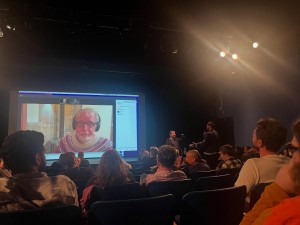
The first organizational meeting went great and we are having another next month, Wed, Feb 3rd.

The purpose of the group is to unite like-minded who enjoy filmmaking or some aspect of it. The plan is to provide A) comradery, B) education and C) support to the local filmmaking community.

The group is for the general public and will allow for many networking opportunities. I am basing the group organization and meetings off of successful meeting groups that I have been apart of. We will provide speakers, demonstrations, showcases and most importantly: RAFFLES!

I am looking for 1) members, 2) speakers and 3) sponsors!

I also would love any advice or suggestions. I have a definite idea of how this group should and will go and grow but I am very open to ideas.

If you fit into any of the categories 1-3 above, please contact me, so that we can discuss how you can contribute to the growth of indie filmmaking!

Also, if you know of anyone else that would be a great fit, let them know about us!

Thanks for listening!

Follow
http://twitter.com/IFotIE
for the latest updates on the group.

And see our new Meetup.com page:
http://www.meetup.com/Independent-Filmmakers-of-the-Inland-Empire-Meetup-Group/

Love,
Eric
___________________

Eric Francis Harnden
Digital Editor, Filmmaker and Industry Blogger

Quintessential Studios
___________________

http://wordpress.quintessentialstudios.net
http://twitter.com/quintessential

http://twitter.com/IFotIE
http://www.meetup.com/Independent-Filmmakers-of-the-Inland-Empire-Meetup-Group/

9 Jan 2010 update: Thanks to


for becoming our first sponsor!

28 Jan 2010 update: Thanks to


for becoming a sponsor!

Independent Filmmakers of the Inland Empire - Jan 2010 Newsletter

January 6th, 2010
Last night, Jan 5, 2010, I held the first organizational meeting for the Independent Filmmakers of the Inland Empire.


Today, I sent out this email:


Hello fellow IFIE’s!


(How do you like that name!)


It was really great to meet you all last night.


I’m thinking of having the next meeting Wed, Feb 3.  How does that work for everyone?


Some events that I am aware of in January/February:


Wed Jan 13:
Los Angeles Post Production Group
lappg.org 
RSVP required $5 donation at the door


Tue Jan 19
Digital Media Artists of Los Angeles
dmala.org
Free but advanced signup needed


Tue Jan 19
Orange County MultiMedia Meetup
General Meeting: Video: Equipment and Workflow
http://www.meetup.com/Orange-County-MultiMedia-Association/
$15/$7 students advanced signup necessary


Thur Jan 21, 10 AM:
Webinar: “Working with Greenscreen Shots”
Register here!
$25

Tue Jan 26, 10 AM:
FREE Webinar: “What’s So Hot About Nuke?”
Register here!


Tue Jan 26, 7PM
Pizza & Post w/editor Gib Jaffe
http://pizzaandpostgibjaffe.eventbrite.com/
Free


Wed Jan 27:
Los Angeles Final Cut Pro Users Group
lafcpug.org
$5 donation at the door

Fri Jan 29:
Everything ARRI
7:30PM on the campus of California State University Northridge, (CSUN) Seating is limited, and RSVPs are required. e-mail: Mathers@DigitalCinemaSociety.org
DCS membership maybe required
digitalcinemasociety.org for more info


Fri Feb 5:
9th Annual FCPUG San Francisco Supermeet
Advanced Ticket purchase needed
http://lafcpug.org

Thur Feb 18:
Createasphere Entertainment Technology Expo (formerly HD Expo)
http://www.createasphere.com/
Advanced registration needed


Let me know if you hear of anything else.
Here is that link that Cosmin mentioned last night:

http://stillmotion.ca/

– 
___________________

Eric Francis Harnden
Digital Editor, Filmmaker and Industry Blogger

Quintessential Studios
___________________

http://wordpress.quintessentialstudios.net
http://twitter.com/quintessential

and new Twitter for IFIE updates:
http://twitter.com/IFotIE

++++++

I am looking for speakers for our future meetings and for sponsorship from industry companies!

If you are interested in helping and supporting independent filmmaking, please contact me!

P.S. I’ll Keep updating the upcoming events as I learn more.

What I Learned Last Night about Mocha, AJA KiPro and The New Now

October 15th, 2009

I attended two events last night: Mocha training by Imagineer at New Media Hollywood and the Los Angeles Post Production Group meeting.

I happened to be only one of two that attended that particular session of Mocha training.  I guess people don’t like to go outside in the rain!

New Media Hollywood seems like a chill place.  They have a foosball table in the front waiting area, if that is any indication.  They are your basic post production provider/reseller.  You can get systems, software, editing bay rentals, etc.  After an decent hands-on Mocha class, I decided to tell others about their discounts and took some flyers to LAPPG.

I’ve been impressed with Mocha and Shape ever since they demoed at LAFCPUG a while back.  Mocha is a planar tracker, so it’s very accurate.  It is more accurate if you define more areas to track.  Then you can adjust the “surface” for a clean export of tracker layer data.  It seriously has a lot of “smarts”.

I also learned about another Imagineer product, Mokey.  This one actually tracks and replaces the hole with what should be there.  Pretty cool.  We went through removing a sign from a yard, as a car drives by.

Props to Ross Shain for an excellent training session.

LAPPG

Later, at LAPPG, I met some nice “new” people including a photographer who proclaimed “Stills are dead… Be prepared for millions of new video people.”  I posted that claim on Twitter and it inspired this post: http://blog.jayfriesen.com/2009/10/millions-of-new-video-people-my-take/

Being early to the meeting I was one of the lucky ones who got a $5 gift card to Showbiz Store & Cafe.  I also partook in some coffee, cookies, a piece of pizza and some brownies.

Woody who founded LAPPG said he’s on a panel for “http://backpackfilmschool.com/” which sounds cool.  Check that out.

Jeffrey Way from AJA went on to talk about the AJA KiPro.  I’ve already been aquainted with the KiPro but I did learn some new things.  One, is that the Sony V1U is a small camera, small like JVC GY-HM100 small.  I learned this because one of the LAPPG members brought one and they used it to hook up to the AJA KiPro.

I also learned that Apple’s Pro Res (HD) is 220Mbits/sec.  Random fact, I know, but here’s some more: The AJA Xena card is the same as the Kona card but it’s for a PC and it just uses different drivers.  So I guess that means if you want to use your Kona card on a PC, all you have to do is download the Xena PC drivers.  There are also some ports on the AJA KiPro that aren’t usable yet.  They are for future upgrades.  You can also use your KiPro like an IO HD.  It’s basically the next gen of that product.  Cross, up and down convert to your heart’s content with this little unit.  It also works as a monitoring unit.  By that I mean a hook-up-your-monitor-to-see-your-footage, type of monitoring unit.  (I’m really not hip to that whole side of things yet but those of you that are should appreciate that.)

Then, the best for last, I learned that Philip Hodgetts wrote a book called The New Now.  And in this book, there are lots of pieces of information on how to grow your video business.  His talk was very inspirational, at least I know it was to two people for sure, myself and one friend, Chris, who sends out a newsletter-type email every month or so.  We talked about how we are going to use information from Philip’s talk in our own businesses, after the meeting.

Chris’ website is here: www.chrishartedits.com Hey! He’s done a comedy short that’s winning lots of awards that has that kid from Glee in it!

Philip talked about some things: the clue train manifesto, H.A.R.O. (Help a Reporter Out), caring about the customer and to install Google Analytics on to your site.  I know I’m being random with this post and my facts, I think I’ve been on Twitter too much lately!

If you get a chance to see Philip Hodgetts, do it.  And if you like what he has to say, maybe you’d want to buy his book. It’s available here: http://proappstips.com/TheNewNow/ and I’ll be reviewing it here later.

The New Now by Philip Hodgets

The First 48 (part 3)

October 9th, 2009

First Signs of Problems

If you’ve ever been on a film shoot, you know one thing for sure. There is a lot of waiting
around!

One of the first “two-hour film projects” we did was called “Berlin Metro“, not at first but it came to be known as that eventually.

This practice shot was mostly arranged by our Production Manager. Our Production Manager was very good at finding locations and support for our crew as he was “connected”, being a lawyer and all. The first shot was at an empty warehouse that one of his friend/clients had just rented and was currently empty.

The goal of this meeting was to go through the whole process, from random genre, character, prop and line of dialogue selection to writing to shooting to editing.

The basic idea we had was that everyone would be included in the brain-storming process and then after a basic story idea was formulated, the writers would spend time by themselves writing the story. This basically is a good idea and as long as you keep your roles heavily defined, this works.

“Defined roles” are the key words in this case. Who does what and who listens to whom? During the first few meetings leading up to this “dress rehearsal”, we talked about who wanted to do what. I felt it was best to try to let people do what they were most interested in doing, first, then add to that as needed.

What hats were given out? Well there was the “Production manager-writer”, the Producer, the “Director-writer”, the “Assistant Director-writer”, a “Grip”, some “Sound Guys”, an “Editor”, a couple of “Actors (who ended up wanting to be writers)” and a couple of just “Actors”. Oh! And, my two “Writers”. It was all a little up in the air at this point, ’cause you never know who’s going to be with you at the end and I was a little unsure how it would all settle down and sort itself out.

The “pre-production” meeting is still a little fuzzy to me, as it was while it was going on (just because it was a bit chaotic) but I do remember some details and the production and the post pretty vividly! There was some talk about a character and a prop and an escaped killer and the writers started to put it all together. During that time, we started setting up lights in the warehouse and stuff and our production manager kept “writing” with “the girls” (the writers). (more on this later)

While setting up, one of the crew says, “this looks like a subway” and thus the subway shot came into being.

While the girls were writing, our director-writer was doing some writing of his own. He kept popping out and telling the writers, “Okay, this is the story!” He would add, “Oh, but don’t let me mess you up.”

I recall one of the writers saying, “Oh but I like that idea” and eventually they just went with his idea.

INT. WAREHOUSE - NIGHT

Camera blocking, lighting and actions were being set. The first signs of problems weren’t even apparent to me but they were occurring. The 1st AD had set up a way that the lights and fan should be run (for a subway effect) and had someone set up to run them. Then our “creative” production manager, who was running the b-camera decided that he could run the lights instead, to solve a problem of our director wanting more people in the shot. (This would cause effects problems, more about later, but was just another example of his not being able to think outside the box.)

During the setup of the lights, I had my first personal indication of future problems. One of the actors (that really wanted to write too) came up to me and said, “Who’s in charge? I mean who should I be listening to?” She went on to tell me that we were doing a lot of standing around doing nothing and that this was all taking too long. Basically, she was right in her observations but to me it was her attitude and delivery of said communication that rubbed me the wrong way. I felt like, “You know, you just don’t go up to your producer and say those things!” I suppose it was my lack of initiation in “running things” that led to these attitudes but inside, I also felt I should let these things shake themselves out at this stage of the game.

As we shot, and shot and shot, the night became longer and longer and attitudes were starting to show themselves. The production manager kept stewing and saying loudly under his breath that we had to wrap things up. The feisty “actor” kept mentioning how late it was. Our director just had to get another take of that shot. And, I eventually had to say, “Okay, THIS will be the last shot.”

We wrapped and everyone was pretty beat. I thanked everyone for their time and work and the “post-production team”: director, production manager and I went off to “edit”.

Later, I would discover that my 1st AD was very happy with “his experiment” of seeing how people would react under the continued stress of an unorganized situation. That, I would immediately decide was a good idea and continue on with. The 1st AD, the director and I would have many meetings as to what worked and what didn’t and, believe it or not, these personnel “problems” would eventually sort themselves out.

What I learned: Defined roles are defined for a reason. Stick to them!

To be continued…

(Next 48 Hour Installment: The Assassination at India Palace)

“Digital” Filmmaker

September 12th, 2009

Conflict!

Boy that seems to be the driving force behind a lot of businesses, telecommunications or otherwise. Heck, in most people’s lives too! Would life be better without it? I think we’ll never know.

There are at least three sets of competing technologies in the telecommunications industry that I am aware of at present time, trying to control their market shares. One is editing programs. Avid, Apple and Adobe are the bouting companies there. Then there’s the famous “I’m a Mac, I’m a PC” fight. And then finally there is digital movies versus film movies. There are many more, like digital radio vs. standard radio or Internet TV vs. HD TV but I’m going to talk about the one I’m most connected to recently, film format vs. digital format.

I’m an up and coming indie “digital” filmmaker. I haven’t even cut one frame of film. I started my new journey a year and a half ago.

There are people on both sides of the fence on this controversy. Old-timers and newbies alike sit on either side of this debate. My uncle works for a major studio as a projectionist. He has worked there for quite a long time. He plans to retire in ten years. According to him he’ll still be playing movies on film projectors when he does.

He is among the group of people that embrace both technologies but prefer the older film technology. Another is Director of Photography, James Mathers. James spoke at a recent Orange County new media event on the future of digital cameras, specifically on what’s called 4K, meaning 4,000 lines of resolution (vs. 1080 which is HD). He loves to shoot on the new 4K cameras but states that he prefers to shoot film. I’ve noticed that most people, who have experience shooting film, prefer it. I think it’s more of an art thing. They feel more control and artistic when working with light in an analog manner, rather than dealing with it in an impersonal digital format on an impersonal computer, to boot.

Theatres are slowly changing to digital projection but according to my uncle, “They cost more to fix and are being replaced by film projectors when they do break down.”

I was at a recent HD Expo, March 5th, 2009. There, another old-timer, Rodney Charters, ASC, talked about his experiences shooting on new 4K technology cameras and that the show he works on 24, has made the switch to all digital, “no more film”. It was also during this seminar that I learned a stunning fact. One of the two top producers of digital projection technology was the very company my uncle, the die-hard film man, works for. It’s going to make for an interesting conversation the next time I see him!

To put things in perspective, film is closer to 6K in its resolution but it is expensive and film is delicate. I’m sure you notice the scratches in the film when you’re at the theater. The RED company is working on cameras now that will shoot digitally at 10K. There are lots of people very anxious for them to come out with them. Digital projection is much clearer, no scratches. Not to mention, the world is being trained to like HD and accept no less.

There have been many Kodak plant closures. Film processing is only done in a few places these days, when it used to be all over. Film also uses a lot of chemicals to process and there are arguments as to whether or not film isn’t destructive to our environment. There is even some that argue back that maybe the creation of digital media is destructive too. But I think the trend will always go towards the new. I don’t know anyone working on new film technology.

I work in the computer industry and watched the old dogs fight to keep main-frame computers and THEIR jobs from going away. But schools don’t teach main frame computing anymore and companies are moving away from them too. That’s just the way it goes. Out with the old and in with the new.

There are many similar stories in all types of technologies.

The next point of contention is archiving. Film lasts a lot longer than digital data. But they are coming to terms with that too. Just as punch cards moved to tape and then to digital storage in the computing industry, so will go film. They are already agreeing to terms of such storage.

Very few people learn to shoot and edit on film anymore. (I hope I get to here at RCC before it goes away but merely for historical study, really.)

Universities, like USC, are going all digital. Theaters are moving in that direction. Kids growing up probably won’t even know what “film” is. When they are grown, I suspect, film will be gone.

I don’t think the feud is as rough as the one between David Sarnoff and Edwin Howard Armstrong but I’m sure there are some people with stakes in the film industry that are fighting just as hard to stay around.

For my uncle’s sake, I hope it does take ten years to resolve. But in the end, I know I’ll be there working in digital as will many others, until the next new thing comes around!

The First 48 (part 2)

August 23rd, 2009

What Worked and What Didn’t
There were a lot of things that worked. There were a lot of plans that we were able to make ahead of time to make things easier. There were things we should have done but didn’t. There were a lot of things that could have been improved. And, actually doing the things we planned to do, would have helped out a lot!

I think we learned what to do next time and everyone seemed excited about doing it again.

First Official Meeting. Only 3 people from this picture continued on.

Pre-event Meetings
As I mentioned before, I started having meetings in June. I think we had 8 – 10 meetings total, including meetups and one field trip. The field trip was a seminar on DIY micro-budget filmmaking by John Putch. That was part of the Pizza & Post series given by Video Symphony, a post production school in Burbank. From those meetings we did three “two-hour film projects”. These weren’t completed in their totality in two hours but some portion of the process was completed in two hours (or so!)

This worked because it gave us a view into what our weak points were. We were able to plan more accurately the schedule that would be the 48 hours. It also worked to flush out “bad” attitudes or people or views that I didn’t want to work with on this project. It was good to see what were at first suspicions, grow into actuality and prove to me that if I ever detect those things in the future, that I am right and to just get them off the team right then and there and don’t waste time dealing with them.

People intimate with the team and its progress will know who I’m referring to but I just want to talk about the particulars so that others reading this can form their own opinions. I’m not saying that those “bad” attitudes are necessarily bad, I’m just saying they didn’t agree with my desires and as such were better off doing their own thing and not butting heads with me.

So this is how that all went down:

First person I met (other than people I already knew, who would work on the project) was a lawyer who had experience creating his own pilot home improvement show. Great guy. Very motivated. But, when first exchanging emails with him, I thought to myself, “I don’t think this is going to work out.” As any successful business person is, he was very passionate and very “right” in his opinion of how things should run. He was also a very creative guy and wanted very much to contribute to the creative side of things, writing and shooting, etc. We met the day before my official first meeting and face to face we had a lot of similar interests and creative contacts even.

Being a bit pushy and slightly over-bearing, I immediately thought of him as a good production manager, someone who could get people motivated or “pushed” to complete their intended project, on time. This I figured I was weak in, so I thought he’d fit the bill for that part.

The next day, I had my first meeting. He attended and brought his secretary, an actress. She couldn’t stay the whole meeting but I figured that since her boss was going to be running the show, I didn’t have to worry about whether or not she’d flake out on me.

Also at this meeting was one person from the 20 projects project (a filmmaking group I co-founded), whom I wanted for my 1st assistant director. He of course stayed until the end of the project.

The couple that would eventually quit to start their own team where there. They were very motivated and seemed willing to take on any role. They were also musicians and it’s always good to have a stall of musicians around. More on why they quit later.

Also, there was one classmate from my Intro to Telecommunication class at RCC and one classmate from an Intro to Pro HD class I took at Citrus College. Two more classmates from my Intro to Pro HD class would eventually be on my team but the first one had to quit because of health reasons.

We had a few general meetings; organizing, talking about genres, trying to figure out who wanted to do what, getting to know each other, going to the 48 Hour Film Project meet-ups, etc. These meetings really just served the purpose of “we’re a group, let’s see if we can stick together.”

Of the 10 actors and 9 crew/actors that ended up staying on the team, they came from these areas:
5, myself included, from my side filmmaking group, the 20 projects project – Roles: Producer/Actor, Director, Assistant Director/Actor, Actor and Actor.
5 from local bands (friends and family of ours) or friend of one of the bands (All actors)
4 from classmates of mine (Two soundmen/actors, one Writer and one Cameraman/Editor)
1 from Twitter friend of mine (Editor)
4 from craigslist ads or as a result of someone they knew reading the craigslist ad (Writer, Actor, Grip/Actor and Actor.)

Not everyone made the meetings on a regular basis, especially the band members and friends thereof but we had a core 6-7 that did. This built a solid foundation of “the group”.

Three of the core members at Pizza & Post

To be continued…

The First 48

August 15th, 2009

Borrowing from the title of one of the shows I like to watch, I’m going to talk about doing my first 48 Hour Film Project. I’m going to break this down into installments as there is a lot that I have to write on this. So here’s the first.

Crazy Horse, Crazy and a horse

June 22, held my first 48 HFP meeting. This is where I asked people who responded to my Craigslist ad to attend. From that first meeting, I believe I got three new people who stuck all the way to the end of the project. Two other attendees went on to start their own group for the 48 HFP and one more quit near the end and I opted not to bring them back on. The rest just disappeared.

There were more meetings and practice “two-hour film projects” and in the end there were a little over 20 people involved in the project, in one way or another.

The reason I wanted to do this 48 Hour Film Project in the first place is that I have spent the last year and a half studying about editing, video and film making and while reading and doing little practicals here and there, I knew that nothing would compare to actually getting out there and getting my hands dirty with some project with a hard deadline.

At first the group that I co-founded, The 20 Projects Project, seemed lackadaisical about doing the project but as we spent more time preparing for the show, they got more and more excited and active in relation to it.

Around the same time, we got interested in finishing an old project (with a new re-vamped ending) and starting using the practice sessions as “20 projects” projects.

I have studied a few film contests and the 48 Hour Film Project, overall, seemed not so professional that we couldn’t compete and also professional enough that we didn’t feel silly entering it.

I became interested in the Inland Empire 48 Hour Film Project last year but we heard about it too late to really enter and so I put myself on their mailing list to hear about the next year’s competition. Thus I got early emails about it and also had time to get things together in time to enter.

I really consider this more of an experiment in human nature and accomplishment than a film contest. This is a test to see if people working together in stressful situations can actually get a completed product and if they fail, where are the out-points so that they can be improved upon. It was an exercise in management.

I learned a lot of things about myself and different personality types and a whole lot about what not to do. I learned areas that needed improvement and I think we all learned new skills. After all, practice makes perfect and this was really good practice.

There were a reported 25 teams that competed this last weekend and of those, I watched about half. Everyone did a great job completing the task that they set out to complete. I gather that some had the end product that they wanted to achieve. We didn’t.

Stay tuned for more….

Become a Fan of Quintessential Studios on Facebook

July 12th, 2009

Quintessential Studios on Facebook

Quintessential Studios Has Entered the Inland Empire 48 HFP!

July 10th, 2009


Come on out and support local indie filmmaking!

Instructional Course Review: Visual Effects for Directors by Hollywood Camera Work

June 20th, 2009

Visual Effects for Directors
by Hollywood Camera Work.

use school code FCENTRAL for 40% off

Literally years of work went into creating this class and it shows because there is a massive amount of content in this course.  In fact, it’s a 7-DVD course!

The purpose of this course is to learn what is possible and what is not, to give you the ability to predict and make good decisions on the set.

The Visual Effects for Directors course covers digital effects and their principles, so you have a better idea of what can be done.

This is great reference material for Directors or DPs.

It’s not really a how-to, it’s more of a who-does-what and what-exactly-do-they-do.  Knowledge is power and you want the power to know what is required for your film.

Visual Effects for Directors is a complete course that covers:
modeling and texturing, modeling, character animation, 3d, compositing, VFX Cinematography, matchmoving, tracking, how to make 3d more real, lighting, interacting with virtual elements, motion capture, object removal and crowd replication.  All of this in an easy to understand presentation that puts you in command of the terms and concepts needed to fully understand digital VFX.

There are two dvds that are devoted entirely to “Green Screen Intensive”. This is an area that can cost a production tons in post if not set up properly. With this course, you learn the details of all steps of the green screening process, even down to building and painting a green screen set.

Mixing GS Paint

Another benefit is that this course is presented from the viewpoint of how to accomplish all for as little money as possible.

How DO you direct and block on a virtual set? Would you like to know how to get your actor to interact within the set? This course takes you through actual demos and gives you the overall big picture.

It is an invaluable resource and will save you untold hours and dollars on all of your productions.

This course is a must for anyone who plans on having any amount of digital effects work on their project.

I’m one who emphasizes understanding the whole process so that you can make smart decisions in your work.   This course embodies that idea and uses real-life examples thus making you a “virtual” expert!

I recommend this course for Directors, DPs or for anyone wanting to get into digital VFX.

Go to http://www.hollywoodcamerawork.us/vfx_index.html for clips, chapter summaries and order information.